
Our Blog
Wait, Pets Need Dermatologists Too?

As your primary care veterinarians, we often have a lot of first-line tools and therapies to manage conditions that affect the skin, from allergies and ear infections to lumps and bumps, common types of skin infections, and metabolic conditions (like thyroid disease).
When these conditions are chronic, such as allergies and metabolic conditions, they can be super arduous for veterinarian, pet owner, and pet alike to manage. Nothing saddens me more than when a pet owner comes in and says their pet has been up all night itching, and in their distress, waking everyone else up!
One Thing Leads to Another
Allergies, in particular, can be very complex to control. Not only are there several different types (flea bite sensitivity, seasonal or environmental allergy, food allergies, etc.), but the allergies can also cause secondary problems, like ear or skin infections.
We typically recommend testing for and treating all secondary infections and treating the underlying allergy at the same time to get things under control. (Pro tip: Make sure you keep your pet on a monthly, year-round flea prevention, even if you don’t see any signs of fleas! It just takes one flea bite to send an immune system into a frenzy).
If you don’t control the underlying allergy, you will have difficulty resolving those secondary skin and ear infections, and they will be more persistent and recurrent. Allergies are a pain!
And if this weren’t complex enough, now throw in the factor of time and chronicity in trying to manage allergies, and things can get hard to manage really quickly.
Call in the Specialist
Here comes the good part. We have another tool! When we have tried these first-line workups and treatments and are still having trouble controlling itchiness or infections, we will often suggest seeing a specialist for all things skin, ears, and nails: a veterinary dermatologist.
Yes, pets have (and need!) dermatologists too. And guess what? You now have access to a veterinary dermatologist on site at the primary care clinic you know and love. No extra travelling to a new clinic required!
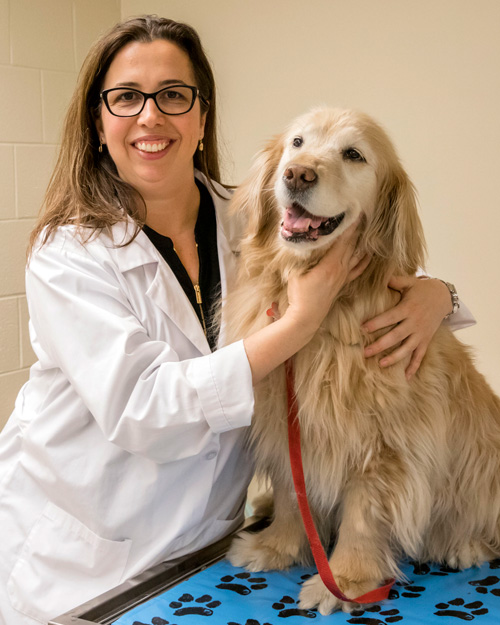
Dr. Clarissa Souza is one of the amazing veterinary dermatologists at the College of Veterinary Medicine Veterinary Teaching Hospital in Urbana. She sees patients at the Medical District Veterinary Clinic on a part-time schedule. And, just like having our cardiologists on site, having specialty dermatology expertise at our fingertips has really elevated the level of care we are able to provide for your pets.
As your primary veterinarians, we have your (and your pet’s) back for all your primary care needs. But when we get those chronic, complex cases and are feeling stuck, now we can get specialty-led answers sooner and pet comfort faster. We love directly collaborating with our specialists to advance the health of our patients. If you have a pet that has unusual lumps or bumps or has chronic skin, nail, or ear issues that have been hard to control, ask your primary care veterinarian if it is worth a trip to see Dr. Souza. (I bet it will be!)
— Amanda Hampton, DVM (she/her/hers)
Screwworm: Should Pet Parents Be Worried ?
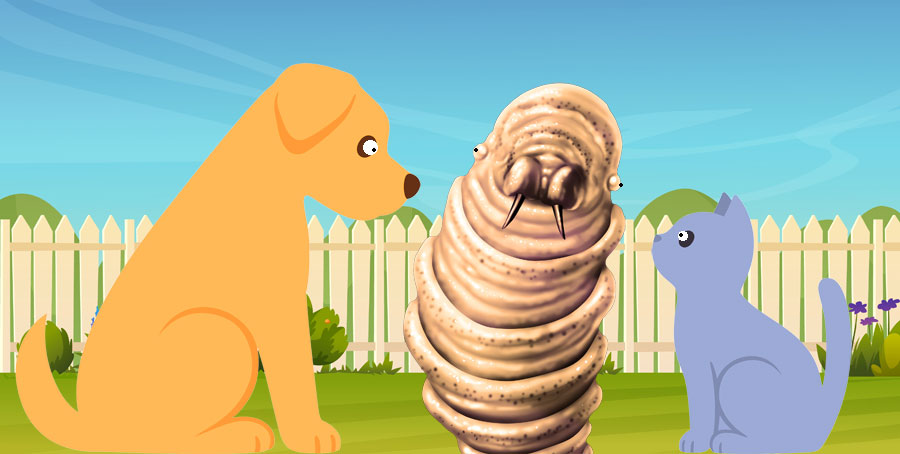
Screwworm is a flesh-eating parasitic maggot that can attack animals and, rarely, humans.
It is the larval maggot stage of a parasitic fly called the New World screwworm (scientific name: Cochliomyia hominivorax). Unlike other ordinary maggots that feed off dead tissue, screwworm larvae feed off living flesh, making it a serious agricultural and veterinary concern.
The U.S. eradicated screwworm in 1966 by releasing sterile male flies. Since female screwworms only mate once, mating with a sterile male produced no offspring. The species still exists in parts of South America but has been controlled with surveillance and sterile fly programs.
Recently, an outbreak has spread through Central America and Mexico, and several animal cases have been confirmed in Texas and New Mexico. No human cases have been reported.
How Does Screwworm Spread?
Screwworm is spread when an adult female fly lays eggs in an open wound or body opening such as the nose, ears, eyes, or mouth. The eggs then hatch into larvae, also known as maggots, which burrow into living tissue to feed. This can create a large and severe wound. If left untreated, it can cause serious injury, infection, and, in worst cases, death.
Cattle, sheep, goats, horses, and other livestock are the main animals affected. However, the larvae can also affect wildlife, pets such as dogs, and, in very rare cases, people. Although human infections are not common, there are higher risks for people who have open wounds and live in areas where screwworm flies are present.
What Are Symptoms/Signs in Pets?
Symptoms can include wounds that suddenly get larger and don’t heal, sensitivity around a wound/injury, swelling/redness/tenderness, bloody, malodorous discharge, visible maggots in a wound, excessive licking, scratching, or rubbing a wound, etc.
If left untreated, the infection can lead to lethargy, loss of appetite, or fever. The situation can become serious quickly because, as the larvae grow, they can destroy healthy tissue, creating deep pockets in the skin that can cause severe infection. In severe cases, the problem can quickly progress to shock or death over a few days if untreated.
What Does This Mean for Pet Parents?
If you see maggots in a wound on your pet and live in or have recently traveled through an affected area, seek veterinary care immediately. Prevent your pet from licking or scratching the wound, and do not attempt to treat at home.
Dogs with open wounds that travel through affected regions are at higher risk. For most dog owners in the United States, screwworm remains rare. However, veterinarians and animal health officials are especially alert because of recent detections in livestock and wildlife in the Southwest.
If you are concerned about a specific wound on your dog, please reach out to your veterinarian.
—Angélica Calderón, DVM
Qué es el Gusano Barrenador, por qué es Importante y Debería Preocuparme?
El gusano barrenador es una larva parásita que se alimenta de carne viva y puede afectar a animales, y en raras ocasiones a seres humanos. Se trata de la fase larvaria de una mosca parásita conocida como gusano barrenador del Nuevo Mundo (nombre científico: Cochliomyia hominivorax). La diferencia de otras larvas comunes que se alimentan de piel muerta es que las larvas del gusano barrenador consumen carne viva, lo que representa un grave problema para la agricultura y la medicina veterinaria.
Estados Unidos erradicó el gusano barrenador en 1966 mediante la liberación de moscas macho estériles. Dado que las hembras solo se aparean una vez, el apareamiento con un macho estéril no produce descendencia. La especie aún persiste en algunas zonas de Sudamérica, pero se ha logrado controlar gracias a programas de vigilancia y liberación de moscas estériles.
Recientemente, se ha propagado un brote por Centroamérica y México, y se han confirmado varios casos en animales en Texas y Nuevo México. No se han registrado casos en humanos.
Cómo se Propaga el Gusano Barrenador?
El gusano barrenador se propaga cuando una mosca hembra adulta deposita huevos en una herida abierta o en una abertura corporal, como la nariz, los oídos, los ojos o la boca. Posteriormente, los huevos eclosionan y dan lugar a larvas conocidas comúnmente como gusanos, las cuales penetran la piel viva para alimentarse. Esto puede generar una herida extensa y grave. Si no se trata, puede provocar lesiones serias, infecciones y, en los casos más graves, la muerte.
El ganado vacuno, ovino, caprino y equino, así como otros animales de granja, son los principales afectados; sin embargo, la plaga también puede afectar a mascotas como los perros, a la fauna silvestre y, en casos muy poco frecuentes, a los seres humanos. Aunque las infecciones en humanos no son habituales, existe un mayor riesgo para aquellas personas que presentan heridas abiertas y se encuentran en zonas donde está presente la mosca del gusano barrenador.
Cuáles Son los Síntomas en las Mascotas?
Los síntomas pueden incluir heridas que aumentan de tamaño repentinamente y no cicatrizan, sensibilidad alrededor de la herida o lesión, hinchazón, enrojecimiento o dolor, secreción sanguinolenta y maloliente, presencia visible de larvas en la herida, así como lamido, rascado o frotamiento excesivo de la zona afectada, entre otros. Si no se trata, esto puede provocar letargo, pérdida de apetito o fiebre. La situación puede agravarse rápidamente, ya que a medida que las larvas crecen, destruyen el tejido sano y crean cavidades profundas en la piel que pueden derivar en infecciones graves. En casos extremos, la falta de tratamiento puede conducir a un estado de shock o a la muerte, progresando con rapidez en cuestión de pocos días.
Qué Significa Esto para los Dueños de Mascotas?
Si observa larvas en una herida y vive en una zona afectada o ha viajado recientemente por ella, busque atención veterinaria de inmediato. Evite que su mascota se lama o se rasque la herida y no intente tratarla en casa. Los perros con heridas abiertas que viajan por regiones afectadas corren un mayor riesgo. Para la mayoría de los dueños de perros en Estados Unidos, el gusano barrenador sigue siendo poco frecuente, sin embargo los veterinarios y las autoridades de sanidad animal se mantienen especialmente alerta debido a detecciones recientes en ganado y fauna silvestre en el suroeste del país.
Si le preocupa alguna herida específica en su perro, por favor consulte a veterinario.
—Angélica Calderón, DVM
Sources of Information/Fuentes de Información
https://www.cdc.gov/new-world-screwworm/about/index.html
https://www.aphis.usda.gov/livestock-poultry-disease/cattle/ticks/screwworm
https://www.avma.org/news/additional-screwworm-cases-confirmed-texas-livestock-new-mexico-dog
How Do You Know What to Feed Your Dog?

As a veterinarian, I get asked quite a few questions, and a handful of them are in competition for the title of “least favorite question.”
What’s the best breed of dog? Why does tick prevention cost more than heartworm prevention? Do I really need that vaccine? Can you look at my dog’s poop? (This one is often accompanied by a photo.) Can you smell this?
And the one I get asked the most: What’s the best food that I can feed my dog?
For most of these questions there is no simple answer, but the one about the best diet may be the hardest to answer. There are so many pet food options and so little regulation of how pet food companies can make and market their diets.
So, what can you trust?
We at Medical District Veterinary Clinic want to facilitate our clients picking a diet that works for their pets and their family as a whole. That means we understand that the cost, type, and how often you feed your pet varies by family. With so many choices available, we often rely on AAFCO standards to know if the diet you select for your pet is adequate.
Who or What Is AAFCO?
AAFCO (which stands for Association of American Feed Control Officials) is a non-profit organization that has been guiding government officials for over 100 years in determining nutritional standards for all pet foods.
Here is their mission statement: AAFCO is a collaborative association that supports members and stakeholders and promotes a safe feed supply through unified system-based regulation, feed ingredients standards, and laboratory operations.
This organization ensures that a diet has the essential nutrients for your pet, with different standards for all types and life stages of pets. That means the AAFCO label will tell you what kind of animal this diet is appropriate for, from a growing puppy to a senior cat.
With the ever-growing number of pet food options out there, you can rely on these standards to know whether the food that you picked for your pet will have the nutrients they need. If the diet you picked for your pup has the AAFCO label, then you won’t hear many concerns from me.
So, you may be asking yourself, what has Dr. Kritzman fed her dog? Well, Miss Emerald Brown Aria Stark Kritzman has been on everything from Iams to Kirkland to Hills Prescription Renal Diet, and now Purina Bright Minds for Senior Dogs, as she enters her twelfth year. (Not including the countless meals from my children that she’s gotten through counter surfing.)
— Dr. Alyssa Kritzman
Why Tooth Extractions May Be Necessary for Your Pet

When we think about our pets’ health, dental care is often overlooked. However, it plays a critical role in their overall well-being. While the idea of a tooth extraction can sound alarming, it’s sometimes the best and most compassionate option to relieve pain and protect your pet’s health.
Why Would a Tooth Need to Be Extracted?
Veterinarians always aim to preserve teeth whenever possible. However, when a tooth becomes severely damaged or diseased, extraction may be the most effective way to restore comfort and prevent further complications.
Removing a diseased tooth provides several important benefits:
- Eliminates chronic pain that pets often silently endure
- Stops active infections in the mouth
- Prevents harmful bacteria from spreading through the bloodstream to vital organs such as the heart, liver, and kidneys
Left untreated, dental disease can impact far more than just your pet’s mouth; it can affect their entire body.
Common Reasons for Tooth Extractions
There are several conditions that may make extraction necessary:
Severe Periodontal Disease (Bone Loss)
This is one of the most common causes of tooth loss in pets. Periodontal disease occurs when plaque and tartar build up, leading to infection and inflammation of the tissues that support the teeth. Over time, this can destroy the bone holding the tooth in place. When significant bone loss occurs, the tooth becomes unstable and painful, making extraction the best option.
Fractured Teeth with Exposed Pulp
Broken teeth are not just cosmetic issues; they can be extremely painful. When the pulp (the inner part of the tooth containing nerves and blood vessels) is exposed, it leaves the tooth vulnerable to infection. In many cases, extraction is necessary to relieve pain and prevent abscess formation.
Retained Baby Teeth
Sometimes, baby teeth don’t fall out as they should and remain in place alongside adult teeth. These retained teeth can trap food and bacteria, increasing the risk of periodontal disease and misalignment. Removing them early helps maintain proper oral health.
Feline Tooth Resorption
Cats are especially prone to a condition called tooth resorption, where the tooth structure begins to break down from within. This process is painful and progressive, often requiring extraction of the affected teeth to provide relief.
Pets Often Hide Dental Pain
One of the most challenging aspects of dental disease is that pets are very good at hiding pain. Many animals will continue to eat normally even when they have significant oral discomfort. You may not notice any changes in eating habits, which can make dental issues easy to miss.
Subtle signs can include:
- Drooling
- Bad breath
- Pawing at the mouth
- Behavioral changes
However, in many cases, there are no obvious signs at all.This makes regular veterinary exams essential.
How Veterinarians Decide Which Teeth Need Extraction
Determining whether a tooth should be extracted involves a thorough and careful process. During a dental procedure, your veterinarian will:
- Perform a comprehensive oral exam while the pet is under anesthesia
- Use a dental probe to assess gum health and attachment
- Take full-mouth dental X-rays to evaluate the roots and surrounding bone
Dental X-rays are especially important because much of the disease occurs below the gumline, where it cannot be seen with the naked eye. This allows veterinarians to make informed decisions about which teeth can be saved and which are causing pain or infection.
Preventing the Need for Extractions
While some dental issues are unavoidable, many extractions can be prevented with proactive care. Consistent dental care at home is one of the most effective ways to protect your pet’s teeth and gums.
Tooth Brushing Tips
Brushing your pet’s teeth is the gold standard for preventing plaque and tartar buildup. Here’s how to make it easier:
- Start slowly and be patient: Let your pet get used to having their mouth handled before introducing a toothbrush
- Use pet-safe toothpaste: Never use human toothpaste. Pet toothpaste is flavored and safe to swallow
- Choose the right tools: A soft-bristled toothbrush or finger brush designed for pets works best
- Focus on the outer surfaces when first starting: Most plaque accumulates on the outside of the teeth, especially along the gumline. Once your pet is used to having their teeth brushed, you can add in the inner surfaces
- Use gentle, circular motions: You don’t need to scrub hard as gentle brushing is still effective
- Keep sessions short and positive: You can separate your pet’s mouth into four quadrants and reward your pet with their favorite treat after each quadrant is brushed to build a positive association. Aim to brush each quadrant for 30 seconds
- Aim for daily brushing: Consistency matters more than perfection
Additional At-Home Support
- Veterinary-approved dental chews or diets can help reduce plaque
- VOHC approved dental rinses or water additives may also be helpful
- Regularly checking your pet’s mouth for redness, odor, or buildup can help catch problems early
Routine COHATs (Comprehensive Oral Health Assessments and Treatments)
Professional dental cleanings, also known as COHATs, are a cornerstone of your pet’s oral health care. These procedures allow veterinarians to fully assess and treat dental disease in a safe, thorough, and effective way.
A COHAT includes:
- A complete oral examination
- Scaling and polishing of teeth (both above and below the gumline)
- Full-mouth dental X-rays
- Treatment of any identified dental issues
COHATs are best performed under anesthesia. Anesthesia ensures your pet remains still and comfortable, allowing the veterinary team to clean beneath the gumline where the most harmful bacteria reside and to take accurate dental X-rays. Intubation also protects your pet’s airway from water and debris during the procedure.
It’s important to note that anesthesia-free dental cleanings are not recommended. While they may appear less invasive, they only address the visible surfaces of the teeth and do not treat disease below the gumline. Additionally, these procedures typically do not include polishing, which is a critical step after scaling. Without polishing, microscopic defects and rough areas are left on the tooth surface, creating an ideal environment for bacteria to adhere and multiply more quickly. This can accelerate plaque and tartar buildup. Attempting to clean teeth on an awake pet can also lead to stress, incomplete care, and even damage to the teeth or surrounding tissues.
Routine COHATs, combined with at-home dental care, are the most effective way to prevent dental disease and reduce the likelihood of needing extractions in the future.
The Bottom Line
Tooth extractions are never the first choice, but when they are needed, they can dramatically improve your pet’s comfort and quality of life. By addressing dental disease early and maintaining consistent oral care, you can help keep your pet healthy, happy, and pain-free for years to come.
– Dr. Jeanette Barragan
Kitten Season Is Coming
Every spring in Chicago, as soon as the weather shifts, we enter kitten season. And every year, we see the impact of unspayed and unneutered outdoor cats.
If you are feeding outdoor cats in your neighborhood, you are already doing something incredible and compassionate. One important next step to strongly consider is spaying and neutering. It is the single most effective way to prevent suffering and overpopulation.
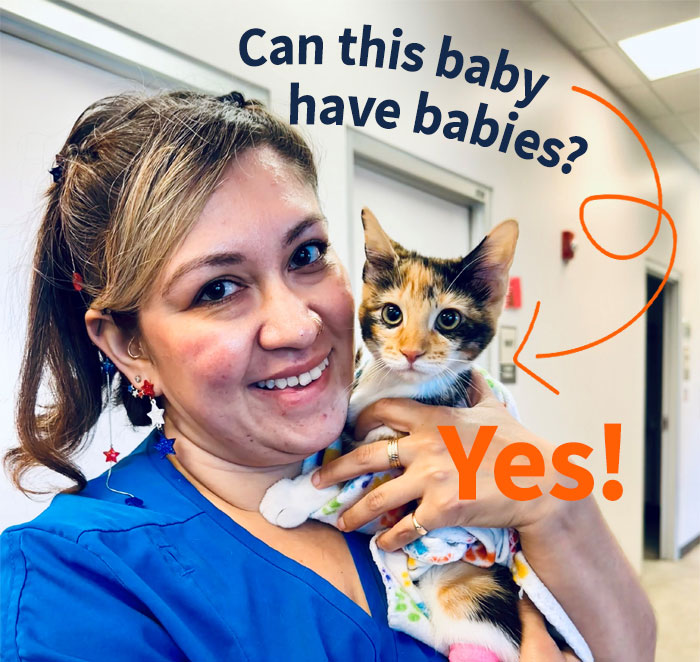
Cats can become pregnant as early as 4 to 5 months of age and can have multiple litters in one season. One intact female can quickly lead to dozens of kittens. See the chart above to see how quickly one unsprayed cat can multiply! Many of those kittens will face illness, parasites, trauma, and limited access to care.
Spaying prevents life-threatening uterine infections and certain cancers. Neutering reduces fighting, roaming, spraying, and the spread of diseases like FIV. In community cats, Trap Neuter Return programs help stabilize colonies over time. If you notice a tipped ear, that cat has already been sterilized.
If you are caring for outdoor cats and are unsure what your options are, we can help. At Medical District Veterinary Clinic, we are happy to discuss spay and neuter services and connect you with local resources.
Spring is coming. This is the time to plan ahead.
— Ana Valbuena (she/her/ella), DVM
La Temporada de Gatitos Está por Llegar
Cada la primavera en Chicago, en cuanto cambia el clima, entramos en la temporada de gatitos. Y cada año vemos el impacto de los gatos que no están esterilizados y viven al aire libre.
Si estás alimentando gatos en tu vecindario, ya estás haciendo algo increíble y compasivo. Un paso muy importante que debes considerar seriamente es esterilizarlos. Es la manera más efectiva de prevenir el sufrimiento y la sobrepoblación.
Las gatas pueden quedar embarazadas desde los 4 a 5 meses de edad y pueden tener varias camadas en una sola temporada. Una sola hembra sin esterilizar puede resultar rápidamente en decenas de gatitos. Mira la gráfica encima para ver qué tan rápido puede multiplicarse una sola gata sin esterilizar. Muchos de esos gatitos enfrentarán enfermedades, parásitos, traumas y acceso limitado a atención veterinaria.
La esterilización previene infecciones uterinas que ponen en riesgo la vida y ciertos tipos de cáncer. La castración reduce peleas, escapadas, marcaje con orina y la transmisión de enfermedades como el FIV. En gatos comunitarios, los programas de Atrapar, Esterilizar y Regresar ayudan a estabilizar las colonias con el tiempo. Si notas que un gato tiene la punta de la oreja recortada, significa que ya fue esterilizado.
Si estás cuidando gatos afuera y no sabes cuáles son tus opciones, podemos ayudarte. En Medical District Veterinary Clinic estamos disponibles para hablar sobre servicios de esterilización y conectarte con recursos locales.
La primavera ya viene. Es el momento de planear con anticipación.
— Ana Valbuena (she/her/ella), DVM
Let’s Have a Heart to Heart
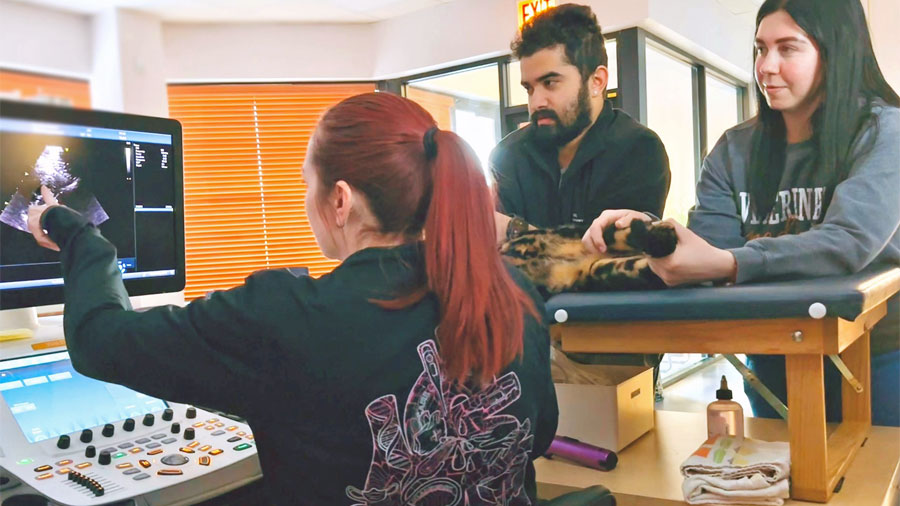
Introducing Specialty Veterinary Cardiology Services at Our Primary Care Clinic
This month, love is in the air, and we’re celebrating the hearts that matter most—the ones inside your beloved pets. We’re excited to announce that our clinic now offers veterinary cardiology specialty services, including echocardiography (heart ultrasound), provided by a board-certified veterinary cardiologist, right here in the clinic you already know and trust.
What Is a Veterinary Cardiologist?
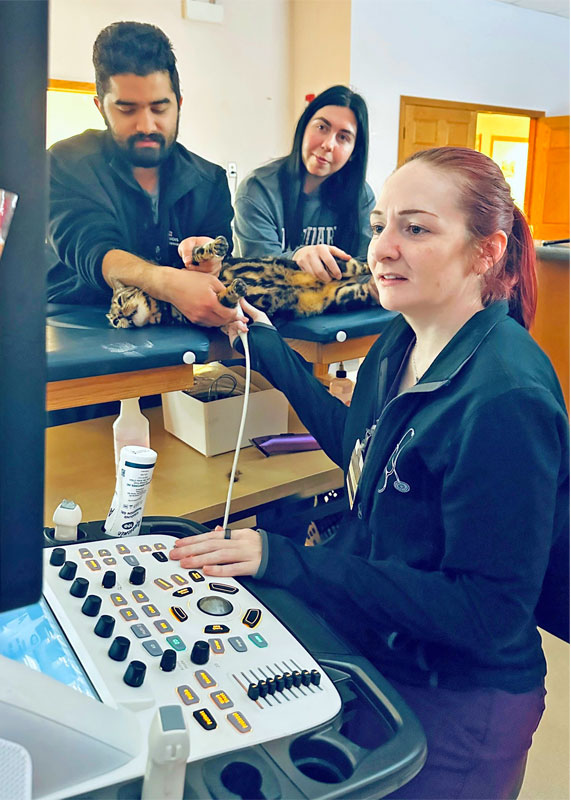
A veterinary cardiologist is a veterinarian with advanced specialty training focused entirely on heart disease. They partner closely with us as your primary care veterinarians to diagnose, monitor, and manage heart conditions—whether your pet is in the early stages of life or enjoying their golden years.
By bringing cardiology services into our primary care setting, we get the best of both worlds: specialist-level expertise paired with the personalized primary care your pet already receives.
An Echocardiogram: A Big Window into Your Pet’s Heart
An echocardiogram is a noninvasive ultrasound that lets us see the heart in motion—how the chambers fill, how the valves open and close, and how effectively the heart pumps blood.
It’s painless, typically does not require sedation, and provides a lot of information that cannot be obtained from X-rays or physical exams alone. It is one of the best ways for diagnosing most forms of heart disease and determining and evaluating what cardiac medications your pet needs. It also gives us clues on anesthetic safety and whether certain sedatives can be used for procedures.
Echocardiography can help diagnose and monitor many cardiac conditions, including:
- Heart murmurs – A heart murmur is an extra whooshing sound heard when the heart is auscultated. An echocardiogram can sort out innocent murmurs (a harmless sound) from true heart disease
- Degenerative (valvular) heart disease – Common in older, small- and medium-breed dogs
- Dilated cardiomyopathy (DCM) – Often seen in large-breed dogs
- Hypertrophic cardiomyopathy (HCM) – The most common heart disease in cats
- Congenital heart defects – Such as PDA or valve abnormalities
- Arrhythmias (abnormal heart rhythms) – When evaluated alongside ECG findings
- Pericardial disease – Fluid around the heart
- Pulmonary hypertension – Increased pressure in the lungs affecting heart function
Why We Love Offering Cardiology Care
From a primary care veterinarian’s perspective, having a specialist work directly within our clinic is truly special and not something we get the advantage of having every day.
A strong heart team: As your primary care veterinarian, we know your pet. Working hand-in-hand with an on-site cardiologist deepens our knowledge of your pet’s health, helps take guesswork out of complex cardiac cases, and allows for stronger decision making recommendations when it comes to things like anesthesia, surgery, and fluid therapy. That teamwork leads to unified treatment plans, better outcomes and fewer complications.
Less stress, more comfort: Vet visits can be stressful for pets and their owners alike. Receiving specialty care in a familiar environment helps pets (and you) feel more at ease.
Faster answers, better continuity: Because cardiology services are available right here, we can remove the specialty bottleneck and move from concern to diagnosis to treatment without unnecessary delays. And with more data on your pet, we can more specifically target treatment plans to your pet’s needs, sooner, and with more confidence.
Expert care with a personal touch: Our cardiologist collaborates closely with our primary care veterinarians to create treatment plans that are effective, realistic, and aligned with your goals for your pet’s health. The streamlined process means you get personalized answers, faster. We love having cardiology right at our fingertips!
When a Cardio Consult Could Help
Your veterinarian may recommend a cardiology evaluation if your pet has:
- A newly detected heart murmur
- Coughing, exercise intolerance, or breathing changes
- Weakness or fainting episodes
- Known heart disease needing monitoring
- Breed-related risk for heart conditions
- Abnormal findings on X-rays or lab work
- A known heart condition and needs an evaluation before an upcoming anesthetic or surgical procedure
You love your pet, and we do too! And now, advanced heart care doesn’t have to mean leaving the clinic you trust. With specialized veterinary cardiology services and primary care all under one roof, your pet can receive expert cardiac care in a place that already feels like home. Don’t hesitate to ask us if a cardiology consult is right for your pet!
— Amanda Hampton, DVM (she/her/hers)
Pet Allergies: From Head Shakers to Bottom Scooters

When your allergic pet gnaws on her haunch or licks his feet incessantly, the habit might annoy you just as much as it does the pet. Some furry friends go their entire lives without suffering from allergies. But those of us who have had pets with allergies know the problem can take a big toll on quality of life.
Dr. Stephanie Bruner is a veterinary dermatologist at the University of Illinois College of Veterinary Medicine. She sees patients at the Veterinary Teaching Hospital and offers insights into what’s going on with all that scratching and shaking.
Dermatology Services at Medical District Vet Clinic
Since November 2025, Dr. Clarissa Souza, a boarded dermatologist from the University of Illinois Veterinary Teaching Hospital, has offered appointments on a part-time basis at the Medical District Veterinary Clinic in Chicago. She diagnoses and treats allergies, skin infections, ear diseases, hair loss, nail and nail bed diseases, itching/scratching/biting, and more.
Please call 312-226-2588 to schedule a dermtology appointment for your pet.
What Are Allergies?
“Allergies occur when the patient’s immune system experiences an over-the-top response to any of a wide variety of triggers,” Dr. Bruner explains. “Offending stimuli may range from fleas, foods, pollens, and mold spores to dust mites or even medications. The result is an adverse reaction somewhere in the body.”
Currently, science does not have an answer for why allergies occur in one individual but not another. However, we do know that certain breeds are more susceptible to allergies.
“Genetics plays a role,” Dr. Bruner says. “Various breeds of retrievers, spaniels, and terriers, to name a few, are at a higher risk of developing clinical signs associated with environmental allergens.”
Other factors besides genetics include geography, seasonal fluctuations in pollen counts, the animal’s indoor and outdoor habits, air quality, diet, and the health of the patient’s skin barriers.
“This exceedingly lengthy list explains, at least in part, why no two allergy patients can be treated the same way,” says Dr. Bruner. For this reason, veterinary dermatologists must take a tailored approach to treating each allergy patient.
Allergy Symptoms
In humans, allergies tend to manifest as itchy eyes, sneezing, or runny noses. They can appear as rashes or even result in inflammation and difficulty breathing. In dogs and cats, however, allergies trend toward a different list of symptoms entirely.
In dogs, symptoms include scratching, licking, and rubbing in areas such as the ears, face, feet, belly, and rear end.
“I refer to these as my ‘Big Five’ patients,” Dr. Bruner explains. “These are the head shakers, face rubbers, foot lickers, belly scratchers, and bottom scooters.” Other signs include ear or skin infections that just keep coming back, no matter how often you treat them.
Our feline friends are better at hiding symptoms, and therefore cat allergies tend to look more like excessive grooming. “Cat allergies can also become more obvious if itchy crusts develop on the skin or large areas of swelling arise, possibly resembling ulcers or growths,” says Dr. Bruner.
Identifying the Allergy Culprit
When diagnosing an animal with allergies, veterinarians start by determining what is not causing the reaction.
“First, allergies are diagnosed by ruling out other disorders that can mimic them, such as external parasites, fungal infections, or autoimmune disorders,” Dr. Bruner explains. “Then, the real work begins.”
Pets, like people, suffer from many different types of allergies, such as environmental allergies and food allergies. The first type of allergy to rule out is flea allergy dermatitis.
“Flea allergy dermatitis patients are not typically horribly infested with fleas, but a small number of fleas can cause big problems,” says Dr. Bruner. “Routine flea prevention, prescribed by a veterinarian, can be a real game changer.”
If fleas aren’t to blame, then doctors move on to environmental allergies. “In this case, the patient’s medical history can help answer this question. For example, a dog that only scratches and experiences ear infections in the summer is less likely to be reactive to foods.”
For those patients who do not have a seasonal aspect to their allergy symptoms, a diet trial is the next step. “A highly restricted diet trial, using a prescription-grade food under the guidance of a veterinarian, may be the next diagnostic test performed,” Dr. Bruner states.
During the diet trial, which lasts at least eight weeks, the pet cannot have any treats, table food, or dog food other than the special diet food prescribed. “If the patient does not improve by the end of the trial, environmental allergens are likely to be at fault.”
Finding Relief from Allergies
For those pets with food allergies, treatment means staying away from the foods that have been found to cause the reaction. For those with environmental allergies, treatments can range from medicated shampoos, sprays, lotions, and wipes to oral medications or injections.
Dr. Bruner adds, “Most patients will achieve their best outcomes when a veterinarian or veterinary dermatologist works with the whole family and puts together a highly personalized care plan that includes several of these treatment modalities to attack the problem from multiple angles.”
Unfortunately, no “cure” for pet allergies exists. Treatments are meant to ease symptoms so the patient can be more comfortable throughout the rest of their life. “My goal as a veterinary dermatologist is to develop a safe and effective care plan for every allergy sufferer. The plan should be sustainable—both in terms of time and financial investment—for their humans,” Dr. Bruner explains. “Perhaps the best thing that pet owners can do is be aware of the possible early signs of allergies—remember the Big Five!—and consult with a veterinarian before secondary ear and skin infections take the problem to the next level.”
’Tis the Season for Pet Allergies

Pets may be plagued with allergies at any time of the year, according to Dr. Jennifer Clegg, a veterinarian who is completing a residency in dermatology at the University of Illinois Veterinary Teaching Hospital in Urbana. If you suspect allergies are bugging your pet, Dr. Clegg recommends that you see your local veterinarian.
What are the signs that your pet may have an allergy?
“Licking and chewing paws or limbs, scratching ears, shaking the head or face, rubbing the body on rugs or carpets or furniture, and rubbing the hind end on rugs or carpets are all common signs of allergies,” says Dr. Clegg. “You may notice that the excessive licking or scratching has led to hair loss, or even that your pet is pulling out its hair, which happens mainly in cats.”
Dermatology Services at Medical District Vet Clinic
Since November 2025, Dr. Clarissa Souza, a boarded dermatologist from the University of Illinois Veterinary Teaching Hospital, has offered appointments on a part-time basis at the Medical District Veterinary Clinic in Chicago. She diagnoses and treats allergies, skin infections, ear diseases, hair loss, nail and nail bed diseases, itching/scratching/biting, and more.
Please call 312-226-2588 to schedule a dermtology appointment for your pet.
Narrowing the Diagnosis
Your veterinarian will eliminate the most common possible allergies first. Parasites that live outside the body, such as fleas and mites, frequently cause allergies in pets. A flea and tick preventive medication prescribed by your veterinarian should stop this problem. However, if this medication does not get rid of the itchiness, the next step is to consider whether your pet’s food is the cause.
“Some allergies arise when the pet develops hypersensitivity to the protein in their diet,” explains Dr. Clegg. “In these cases, we implement a diet trial, replacing the protein source in the diet with either a prescription hydrolyzed protein diet or a novel protein diet for 8 to 12 weeks.
“By the end of the diet trial, the pet should be symptom free if the protein was the culprit. If the previous diet is then restored and the symptoms return, a food allergy diagnosis is confirmed.”
A successful diet trial requires strict adherence by pet and client. No flavored medications, supplements, toothpastes, snacks, or other food should be given during the trial period.
“Even oral heartworm or flea and tick preventatives must be avoided and a topical product used instead while the pet is on the diet trial,” says Dr. Clegg.
If the diet trial doesn’t eliminate the allergy symptoms, then the pet probably has an environmental allergy.
Outdoor Vs. Indoor Allergens
Unfortunately, in most cases the source of an environmental allergy cannot be eliminated. After all, Dr. Clegg says, “You can’t remove all your trees from your yard or remove all your neighbor’s trees.”
In these cases, the pet’s symptoms must be managed instead. Outdoor allergens vary with the season, if you live in a part of the world that goes through seasonal changes.
Both dogs and cats suffer from springtime allergies, most commonly when trees begin to pollinate. (Although cats are mainly indoor, pollen from trees is in the air and can enter the home.)
In the summer, the main pollen comes from grasses. “Kentucky blue, timothy, orchard, and rye grasses commonly contribute to grass pollen allergies in the Midwest,” notes Dr. Clegg. “And in central Illinois, corn pollen presents a problem for allergic pets during harvest time.”
During fall, weed pollination and ragweed are the main sources of allergens. Additionally, mold spores tend to rise in the fall due to falling leaves and dying plants. Molds thrive on decomposing plant matter and their spores can float in the air.
“For some pets, wiping the paws clean after they come inside may help, but this alone will not be curative,” she says. “However, veterinarians have a variety of prescription medications at their disposal to help manage allergy symptoms. Treatment is tailored to the individual pet.”
Winter typically puts an end to outdoor environmental allergens, but mold spores may continue to be an issue. Indoor environmental allergens are a problem year-round. Veterinarians most commonly see allergies to dust or storage mites.
“Unfortunately, even if you vacuum your house every day and are the most immaculate housekeeper on earth, you will never entirely rid your house of dust mites,” says Dr. Clegg.
Parting Advice
So, what can you do for your itchy pet with an environmental allergy?
Dr. Clegg recommends keeping your pet on year-round flea and tick preventatives. “Even just one flea bite can exacerbate allergy symptoms,” she says.
She also advises against giving over-the-counter medication to pets without a veterinarian’s approval. Over-the-counter antihistamines may not be effective on allergic pets, and certain decongestants can be toxic to pets.
Because most environmental allergens cannot be avoided, the best way to keep allergic pets comfortable is to stay in close communication with your local veterinarian.
When Skin Infections Keep Coming Back: Pyoderma in Dogs and Cats

Skin issues are one of the most common reasons pets end up at the vet. For many itchy dogs and cats, the underlying problem is pyoderma, a bacterial infection of the skin.
According to Dr. Clarissa Souza, a board-certified veterinary dermatologist at the University of Illinois Veterinary Teaching Hospital, understanding what causes pyoderma is the key to treating it effectively – and preventing it from returning.
“Pyoderma is always secondary to an underlying disease,” Dr. Souza explains. “In dogs and cats, the most common primary disease is allergies.”
Dermatology Services at Medical District Vet Clinic
Since November 2025, Dr. Clarissa Souza, a boarded dermatologist from the University of Illinois Veterinary Teaching Hospital, has offered appointments on a part-time basis at the Medical District Veterinary Clinic in Chicago. She diagnoses and treats allergies, skin infections, ear diseases, hair loss, nail and nail bed diseases, itching/scratching/biting, and more.
Please call 312-226-2588 to schedule a dermtology appointment for your pet.
Signs of Pyoderma
Unlike people, who often show their allergies through sneezing or watery eyes, allergic animals primarily have their skin affected and secondary bacterial infections aggravate the problem. And for owners, the signs are usually hard to miss.
“Most animals with skin infections are itchy,” Dr. Souza points out. “Sometimes they are already itchy because of allergies, and they get markedly itchier because of the pyoderma.” Owners may also notice visible changes. “If owners see some scaling, small pink lesions resembling mosquito bites, or yellowish crusts, they should bring their animal to the veterinarian.”
While many owners worry that certain breeds are more prone to pyoderma, Dr. Souza stresses that the bigger issue is allergy prevalence. “I personally don’t think there is one breed of dog that is more predisposed than others,” she notes. “All allergic dogs can have pyoderma.”
Diagnosing Pyoderma
One of the most important messages Dr. Souza hopes to convey to pet owners is that pyoderma must be properly diagnosed.
“Cytology is essential to confirm pyoderma,” she says. “Without cytology, we can suspect, but we will not have a definitive diagnosis.” For cytology, veterinarians collect samples from the skin and examine them under a microscope.
Sometimes veterinarians will culture the bacteria found on the pet’s skin to identify which antibiotics the bacteria respond to. “Culture is recommended when we suspect resistant infections,” Dr. Souza explains. Classic candidates for culture tests include pets that have had multiple antibiotic courses, infections that don’t resolve with treatment, or new pyoderma lesions that appear despite antibiotics administration.
Treating Pyoderma
Dr. Souza supervised a clinical trial at the University of Illinois evaluating how long dogs need antibiotics for superficial pyoderma, the most common form of the disease.
“The main goal of this study was to determine the ideal duration of antibiotic prescriptions,” she says. “At the end, we saw that two weeks of systemic antibiotic treatment should be enough for the great majority of superficial pyoderma cases. We may even be able to use it for a shorter period if topical antibacterial treatment is prescribed together.”
Additionally, and of importance, Dr. Souza notes: “That’s the idea nowadays: to try to use as little as possible of antibiotics so that we are not allowing bacteria to develop resistance.”
She also warns owners against using leftover antibiotics or stopping treatment early. “Failing to complete the full course of antibiotics or using antibiotics prescribed for something else could contribute to bacterial resistance,” she says.
Finally, rechecks are essential so veterinarians can re-assess the skin infection and determine whether it has resolved.
Treating Early, Addressing the Cause
The longer pyoderma goes untreated, the more uncomfortable pets become – and the more likely the infection is to spread, recur, or require aggressive treatment later. Early diagnosis and proper management of the underlying allergy, endocrine issue, or other skin disorders are essential to prevent these infection cycles from repeating.
For owners frustrated by their pet’s repeated pyoderma, Dr. Souza stresses the need to address the underlying problem, which is often allergies.
Most current research focuses on allergy control to get at the root of the problem. “We’ve been seeing companies developing more options for allergy treatment,” Dr. Souza says. “That’s been the focus. Not specifically pyoderma, but controlling the underlying disease.”
With advances in allergy care, dermatologists hope future patients will experience fewer bacterial infections overall.
Importance of Vaccines in Cats and Dogs
As some might have heard, a dog recently tested positive for rabies in Chicago, Illinois. This is the first reported case in Cook County since the 1960s. This development is very alarming and can raise many questions and concerns.
Officials stated that public risk remains low. However, it is very important for pet owners to review current vaccination statuses of ALL pets in the home and monitor for any behavior changes.
Cook County Department of Animal and Rabies Control Confirms Rabies-Positive Dog (cookcountyil.gov)
Vaccines are critical for cats and dogs. They are started at a young age and require a booster dose to ensure adequate immunity. The timing of the booster is also very important. If a shot is missed, then the series must be re-initiated.
There are core vaccines and lifestyle vaccines. Core vaccines are recommended in every patient, whereas lifestyle vaccines are dependent on your pet’s activity and lifestyle.
When you vaccinate your pets, you’re providing them with the immunity needed to fight off potentially life-threatening diseases.
Rabies Vaccine in Dogs AND Cats
Rabies is transmitted via bite wounds, usually by wildlife such as skunks, bats, raccoons, and foxes. This virus attaches to local muscle cells, penetrates local nerves, then ascends to the brain.
There is no reliable, effective treatment for rabies, and infection usually results in death of the infected animal. Once clinical signs are present, death can occur within 10 days. Clinical signs can include restlessness, aggression, excessive drooling, and lethargy.
It is highly recommended to vaccinate at 4 months of age. However, the vaccine can be administered at an earlier age on a case-by-case basis. Early vaccination is common in shelter settings.
The first vaccine is a 1-year vaccine. The following year your pet can get either the 1-year or the 3-year rabies vaccine. Having your pet vaccinated with the rabies vaccine is required by law.
If your pet bites another animal or human and is not up to date on their rabies vaccine, they might have to be confined and observed at a veterinary facility for 10 days. If the animal shows clinical signs or if there is suspicion that the pet might have rabies, their brain tissue must be submitted for sampling. This means that they must be humanely euthanized for tissue submission.
Regulations can vary by state and county, so it is important to keep up with current regulations. You can visit rabiesaware.org for more information regarding regulations in your area.
Prevention consists of vaccination as well as limiting exposure to wildlife.
Please visit your local veterinarian if your pet is not up to date on their rabies vaccine.
Vaccines in Dogs
Distemper (DAPP)
The distemper vaccine protects against the Distemper Virus, Adenovirus 1 & 2, Parvovirus, and Parainfluenza virus. Parvovirus is one of the most common viruses that this vaccine covers.
Without treatment this virus can be fatal. Intensive care (usually is supportive care) is essential for dogs infected with parvovirus. It is important to understand that this can mean a 5- to 7-day hospitalization, potential long-term organ damage, as well as an expensive bill depending on how severe your dog’s signs are. https://veterinarypartner.vin.com/default.aspx?pid=19239&id=4951468
The DAPP vaccine is started at 8 weeks of age and must be boostered at least three times, 3 to 4 weeks apart. This means that your puppy will get a DAPP vaccine at 8 weeks old, 12 weeks old, and 16 weeks old. After the initial puppy series, the vaccine becomes annual. A 3-year vaccine is available after the initial series.
Leptospirosis
Leptospirosis is a bacteria that can enter the body via open wounds or mucus membranes. Dogs can become infected via infected urine or infected water and soil. This bacterium can survive for weeks to months in the environment, so it is important to have your pet vaccinated if you live in an area that has a high rodent population.
Leptospirosis is zoonotic which means that humans can get infected as well. Infection can quickly lead to organ damage and can severely affect the liver and kidneys. Clinical signs can be very nonspecific, and treatment consists of antibiotics and supportive care. https://veterinarypartner.vin.com/default.aspx?pid=19239&id=4952105
The leptospirosis vaccine is highly recommended in pets living in areas that have a high rodent population, like Chicago. It can be given as early as 12 weeks of age and requires a booster vaccine 3 to 4 weeks after the initial dose. It then becomes annual.
Bordetella
The canine Bordetella vaccine covers Canine Kennel Cough. It is recommended to be given annually or, in some cases, every 6 months.
Bordetella is spread via respiratory secretions from an infected dog. Clinical signs can range from mild to severe symptoms and treatment is dependent on severity. Various boarding and grooming facilities require this vaccine in order to attend their facility. https://veterinarypartner.vin.com/default.aspx?pid=19239&id=4951478
Canine Influenza Virus (CIV)
The canine influenza virus vaccine is a lifestyle vaccine recommended in patients that go to frequent boarding or grooming facilities. Clinical signs can be very similar to Bordetella and can include cough, sneezing, and nasal discharge. Outbreaks are most commonly associated with kennels where dogs are in close contact with other dogs. This virus is spread via nasal secretions. The influenza vaccine requires one additional booster given 3 to 4 weeks after the first initial dose; after that it becomes annual.
Lyme
The canine Lyme vaccine is a lifestyle vaccine. It is recommended in dogs that live in highly wooded areas or in pets that frequently go to forest preserves or camping.
Lyme disease is spread via a bite from infected ticks and can be diagnosed with a SNAP 4DX heartworm test, which entails a blood sample for your dog. Clinical signs can vary and can be very nonspecific. Treatment consists of antibiotics and managing secondary symptoms.
Prevention is cheaper than cure. Additionally, ensuring that your dog is on an appropriate flea/tick preventative is important.
The Lyme vaccine can be given any time after 12 to 16 weeks of age and requires one additional booster 3 to 4 weeks after the first initial dose. After that, it is given annually. https://veterinarypartner.vin.com/default.aspx?pid=19239&id=4952009
Vaccines in Cats
FVRCP
FVRCP stands for Feline Viral Rhinotracheitis, Calicivirus, and Panleukopenia. These can be very contagious and life-threatening infectious diseases. These viruses can suppress the immune system, leaving the infected individual immunosuppressed and vulnerable to other infectious diseases.
The FVRCP (cat distemper) vaccine series should be started at 6 to 8 weeks of age. This vaccine requires boosters every 3 to 4 weeks until your kitten is 16 weeks old. This vaccine is also available in a 3-year vaccine after your kitten’s initial vaccine series.
Feline Leukemia Virus (FeLV)
The feline leukemia vaccine is highly recommended in indoor/outdoor cats due to their frequent socialization and encounter with other cats. FeLV is spread via close social contact with saliva, blood, urine, or feces. There is no effective treatment. Therefore, treatment consists of supportive care. Prognosis after infection can be variable.
This vaccine series requires a booster 3 to 4 weeks after initial dose.
If your pet is not up to date on their wellness exam or vaccines, please schedule an appointment with your primary care veterinarian.
By Dr. Angélica Calderón
Importancia de las vacunas en gatos y perros
Como algunos habrán oído, un perro en Chicago, Illinois salio positivo recientemente con el virus de la rabia, el primer caso reportado en el condado de Cook desde la década de 1960. Esto es muy alarmante y puede generar muchas preguntas e inquietudes. Las autoridades afirmaron que el riesgo público sigue siendo bajo; sin embargo, es fundamental que los dueños de mascotas revisen el estado de vacunación de todas sus mascotas y estén atentos a cualquier cambio de comportamiento.
Cook County Department of Animal and Rabies Control Confirms Rabies-Positive Dog (cookcountyil.gov)
Las vacunas son fundamentales para perros y gatos. Se inician a una edad temprana y requieren una dosis de refuerzo para asegurar una inmunidad adecuada. El momento de la dosis de refuerzo también es muy importante; si se omite, se debe reiniciar la serie. Existen vacunas esenciales y vacunas adaptadas al estilo de vida. Las vacunas esenciales se recomiendan para todos los pacientes, mientras que las vacunas adaptadas al estilo de vida dependen de la actividad y el estilo de vida de su mascota. Al vacunar a sus mascotas, les proporciona la inmunidad necesaria para combatir enfermedades potencialmente mortales.
Vacuna Contra la Rabia en Perros y Gatos
La rabia se transmite por mordeduras, generalmente de animales silvestres como zorrillos, murciélagos, mapaches y zorros. Este virus se adhiere a las células musculares locales, penetra los nervios locales y luego asciende al cerebro. No existe un tratamiento eficaz y confiable para la rabia, y la infección generalmente causa la muerte del animal infectado. Una vez que aparecen los signos clínicos, la muerte puede ocurrir en un plazo de 10 días. Los signos clínicos pueden incluir inquietud, agresividad, babeo excesivo y letargo.
Se recomienda encarecidamente vacunar a los 4 meses de edad; sin embargo, se puede administrar a una edad más temprana según el caso; esto se hace comúnmente en refugios. La primera vacuna es la del 1 año; sin embargo, al año siguiente, su mascota puede recibir la vacuna antirrábica del 1 año o de los 3 años.
La ley exige que su mascota reciba la vacuna antirrábica.
Si su mascota muerde a otro animal o a una persona y no tiene la vacuna antirrábica al día, podría tener que permanecer confinada y en observación en un centro veterinario durante 10 días. Si el animal muestra signos clínicos o se sospecha que podría tener rabia, se debe enviar su tejido cerebral para su análisis. Esto significa que debe ser sacrificado humanitariamente para el envío de tejido. Las regulaciones pueden variar según el estado y el condado, por lo que es importante mantenerse al día con las regulaciones vigentes. Puede visitar rabiesaware.org para obtener más información sobre las regulaciones en su área. La prevención consiste en la vacunación y en limitar la exposición a la fauna silvestre.
Si su mascota no tiene la vacuna antirrábica al día, visite a su veterinario local. https://veterinarypartner.vin.com/default.aspx?pid=19239&id=4951479
Vacunas en Perros
Distemper(DAPP)
La vacuna de distemper protege contra el virus del distemper, adenovirus 1 y 2, parvovirus y virus de la parainfluenza. El parvovirus es uno de los virus más comunes que cubre esta vacuna. Sin tratamiento, este virus puede ser mortal. Los cuidados intensivos son esenciales para el tratamiento de un perro infectado con parvovirus y el tratamiento generalmente es de apoyo. Es importante entender que esto puede significar una hospitalización de 5 a 7 días, así como una factura costosa dependiendo de la gravedad de los síntomas de su perro. https://veterinarypartner.vin.com/default.aspx?pid=19239&id=4951468
La vacuna DAPP se inicia a las 8 semanas de edad y debe ser reforzada al menos 3 veces, con 3-4 semanas de diferencia. Esto significa que su cachorro recibirá una vacuna DAPP a las 8, 12 y 16 semanas de edad. Después de la serie inicial para cachorros, la vacuna se vuelve anual, aunque también está disponible una vacuna de 3 años después de la serie inicial.
Leptospirosis
La leptospirosis es una bacteria que puede ingresar al cuerpo a través de heridas abiertas o membranas mucosas. Los perros pueden infectarse a través de orina, agua y tierra infectadas. Esta bacteria puede sobrevivir de semanas a meses en el medio ambiente, por lo que es importante vacunar a su mascota si vive en una zona con una alta población de roedores. La leptospirosis es zoonótica, lo que significa que los humanos también pueden infectarse. Esto puede provocar rápidamente daño orgánico y afectar gravemente el hígado y los riñones. Los signos clínicos pueden ser muy inespecíficos y el tratamiento consiste en antibióticos y cuidados paliativos; sin embargo, en casos graves puede provocar daño orgánico irreversible.
La vacuna contra la leptospirosis es muy recomendable para mascotas que viven en zonas con una alta población de roedores, como Chicago. Puede administrarse a partir de las 12 semanas de edad y requiere una vacuna de refuerzo de 3 a 4 semanas después de la dosis inicial; luego, se vuelve anual.
Bordetella
La vacuna canina contra la Bordetella cubre la tos de las perreras caninas y se recomienda administrarla anualmente; sin embargo, en algunos casos, se recomienda administrarla cada 6 meses. La Bordetella se propaga a través de secreciones respiratorias de un perro infectado. Los signos clínicos pueden variar de leves a graves, y el tratamiento depende de la gravedad. Varias instalaciones de alojamiento y peluquería canina requieren esta vacuna para poder asistir a sus instalaciones. https://veterinarypartner.vin.com/default.aspx?pid=19239&id=4951478
Virus de la influenza canina (CIV)
La vacuna contra el virus de la influenza canina es una vacuna de estilo de vida recomendada para pacientes que asisten frecuentemente a instalaciones de alojamiento o peluquería canina. Los signos clínicos pueden ser muy similares a los de la Bordetella y pueden incluir tos, estornudos y secreción nasal. Los brotes se asocian más comúnmente con perreras donde los perros están en estrecho contacto con otros perros y este virus se propaga a través de secreciones nasales. La vacuna contra la gripe requiere una dosis de refuerzo adicional administrada 3 o 4 semanas después de la primera dosis inicial; después de esa dosis, se vuelve anual.
Lyme
La vacuna canina contra la enfermedad de Lyme es una vacuna que se aplica de su estilo de vida. Se recomienda para perros que viven en zonas boscosas o si su mascota visita con frecuencia reservas forestales o campamentos.
La enfermedad de Lyme se transmite por la picadura de garrapatas infectadas y se puede diagnosticar mediante una prueba de dirofilariosis SNAP 4DX, que requiere una muestra de sangre del perro.
Los signos clínicos pueden variar y ser muy inespecíficos. El tratamiento consiste en antibióticos y el manejo de los síntomas secundarios. Prevenir es más económico que curar, y es importante asegurarse de que su perro reciba un tratamiento preventivo adecuado contra pulgas y garrapatas.
La vacuna de Lyme se puede administrar en cualquier momento después de las 12 a 16 semanas de edad y requiere una dosis de refuerzo adicional de 3 a 4 semanas después de la primera dosis inicial; posteriormente, se administra anualmente.
Vacunas en Gatos
FVRCP
FVRCP significa rinotraqueítis viral felina, calicivirus y panleucopenia. Estas pueden ser enfermedades infecciosas muy contagiosas y potencialmente mortales. Estos virus pueden suprimir el sistema inmunitario, dejando al individuo infectado inmunodeprimido y vulnerable a otras enfermedades infecciosas. La serie de vacunas FVRCP (moquillo felino) debe iniciarse a las 6-8 semanas de edad. Esta vacuna requiere refuerzos y se refuerza cada 3-4 semanas hasta que su gatito tenga 16 semanas de edad. Esta vacuna también está disponible en una de 3 años que se puede administrar el año siguiente después de la serie de vacunas inicial de sus gatitos
Virus de la leucemia felina
La vacuna contra la leucemia felina es muy recomendable en gatos de interior/exterior debido a su frecuente socialización y encuentro con otros gatos. El FeLV (virus de la leucemia felina) se transmite a través del contacto social cercano con saliva, sangre, orina y heces. No existe un tratamiento eficaz, por lo que el tratamiento consiste en cuidados paliativos. El pronóstico tras la infección puede ser variable. Al iniciar esta serie de vacunas, se requiere una dosis de refuerzo 3-4 semanas después de la dosis inicial.
Si su mascota no está al día con su chequeo de bienestar o sus vacunas, programe una cita con su veterinario más cercano.
By Dr. Angélica Calderón